


This article was not written solely based on the official website introduction. In order to confirm whether MatrixIDC's VPS can be used, I have actually opened three testing machines on my end, covering three specifications: 1-core 1G, 2-core 4G, and 10 core 16G. The lines are all Los Angeles CN2+9929+CMIN2. All three machines can run normally after being turned on, and the backend can directly see IPv4, SSH information, data usage, system reinstallation, renewal, and upgrade configuration entrances. The overall control panel is relatively clear.
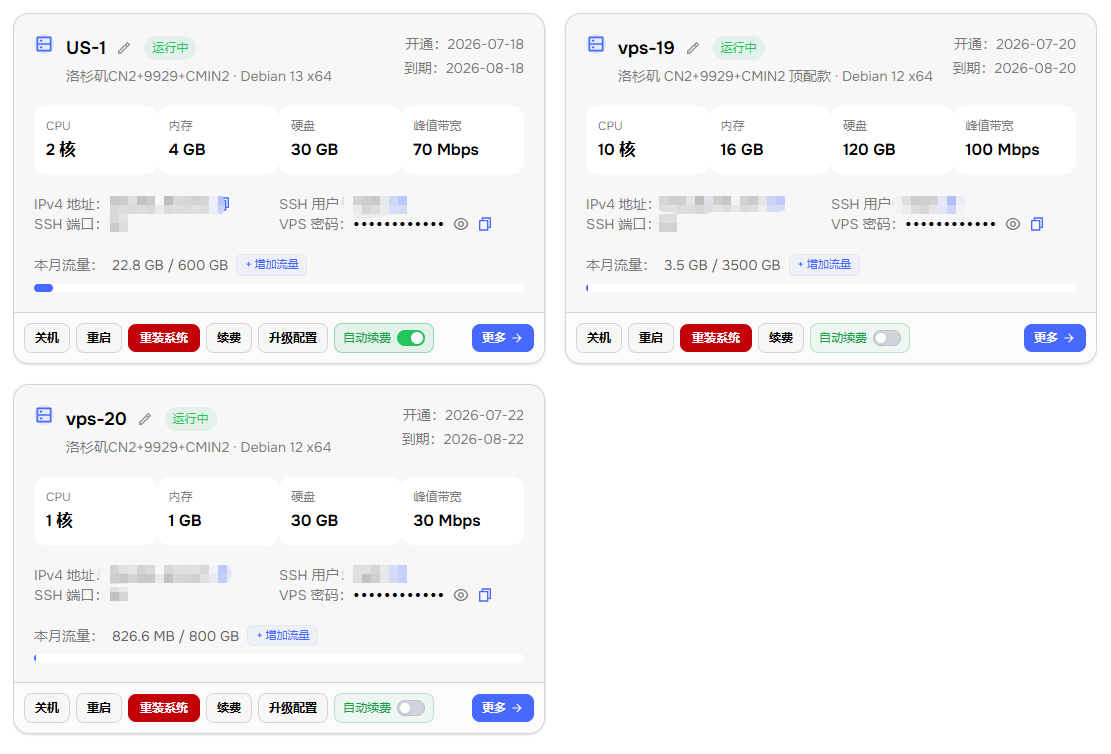
From the actual test results, the performance of these three machines is quite good. Especially for the Chinese Mainland direction visit, the average test delay of ITDOG 171 domestic monitoring points is about 160ms, and most nodes in the three networks of China Telecom, China Unicom and China Mobile have no obvious packet loss. For those who need US VPS, cross-border access, lightweight business deployment, remote panels, API services, or account business auxiliary environments, this route performance is of reference value.
First, let's draw a conclusion: MatrixIDC's Los Angeles CN2+9929+CMIN2 VPS is more suitable for the U.S. server scenario that requires access quality in Chinese Mainland. It is not a residential ISP proxy and cannot replace the static residential IP used for long-term account login. However, as a website, backend API、 The latency and packet loss performance of the three testing machines for remote panels and cross-border business servers were relatively stable.
Why do I focus on MatrixIDC's wiring
I don't only look at the configuration table when it comes to VPS. No matter how well the configuration table is written, it is still very uncomfortable to use if the actual line is detoured, packet loss occurs during peak hours, and domestic access jitter is large. Especially when doing cross-border business, remote backend, website services, or tool panels, wiring has a greater impact on physical perception than just CPU memory.
The focus of this test is on MatrixIDC's Los Angeles CN2+9929+CMIN2 line. This combination is more suitable for Chinese Mainland to visit businesses in the US, because it is not an ordinary international route. In theory, it will be more suitable for cross-border access, website backstage, remote management and some long-term online small services than the ordinary US VPS.
I also simultaneously checked the public information on the official website of [MatrixIDC] (https://matrixidc.net/). The official website currently focuses on overseas cloud servers optimized for access to Chinese Mainland. The product page displays the VPS optimized for the US return trip, Hong Kong cloud servers and different route descriptions separately, CPU、 The basic configurations of memory, hard disk, peak ports, monthly traffic, and IPv4 quantity are also clearly written. This point is useful for new users because many VPS service providers' problem is not that the machine cannot be used, but that the wiring and restrictions are too vague before purchasing.
However, the official website description can only serve as a first level reference. The true decision on whether it can be used in the long term depends on actual screenshots, network latency, packet loss, backend delivery, and after-sales response. The focus of this article is on these pieces of evidence.
ITLOG 171 domestic nodes:
average latency of approximately 160ms
According to the ITLOG summary chart, this test covers 171 monitoring points in China and has been completed. The average latency of all nodes is about 160ms, with the fastest node being Jiangsu Nanjing Telecom at 132ms and the slowest node being Xinjiang Yili Mobile at 218ms.
From the perspective of telecom operators, the average for China Telecom is about 158ms, China Unicom is about 163ms, and China Mobile is about 159ms. This result belongs to a relatively stable range when compared to VPS in Los Angeles, USA. It is not a short distance experience of tens of milliseconds like that of Hong Kong servers. However, if the target is an American computer room, and at the same time, it is hoped that the visit to Chinese Mainland will not be too uncomfortable, this delay level is acceptable.
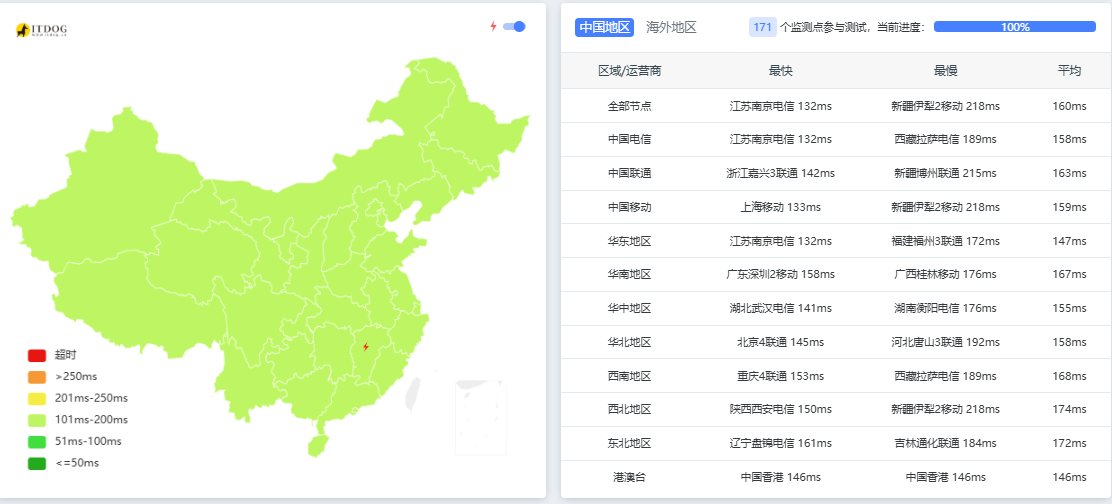
It should be emphasized here that average latency is not the only indicator. The real trouble with VPS lines is often not the high latency of a single node, but the widespread jitter, packet loss, or complete detours by a certain operator. From this summary chart, no large-scale red anomalies were observed in this test, and the overall distribution is relatively normal.
If you are providing access to the US backend for domestic users, an average latency of around 160ms may not be as smooth as a local server, but web backend, lightweight APIs, panels, monitoring, document sites, and small business systems are generally affordable. If you want to do high-frequency real-time interaction, gaming, low latency trading, or business that is sensitive to every few tens of milliseconds, you should not only focus on optimizing VPS in the United States, but also prioritize nodes in Hong Kong, Japan, or closer to users.
Performance of the three networks:
China Telecom, China Unicom, and China Mobile can all run
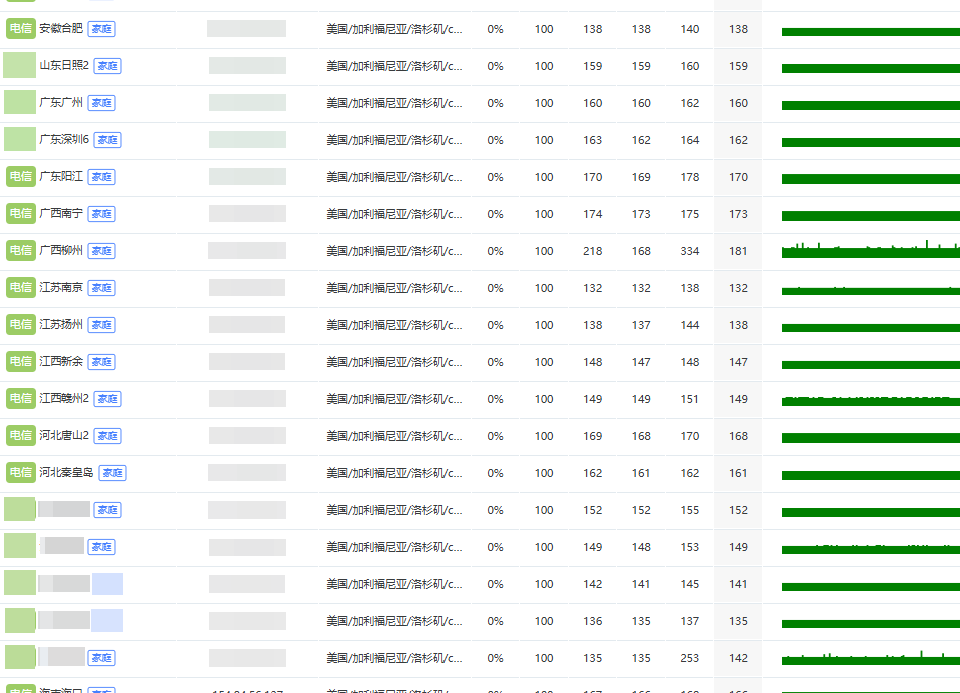
The overall stability of telecommunications nodes is relatively high, with multiple regions showing 0% packet loss and latency mostly concentrated around 130ms-170ms. For example, nodes such as Jiangsu, Guangdong, Anhui, and Shandong have a relatively flat overall curve without significant large-scale fluctuations. For websites or backend platforms with a large number of Chinese telecommunications users, this performance is of great reference value.
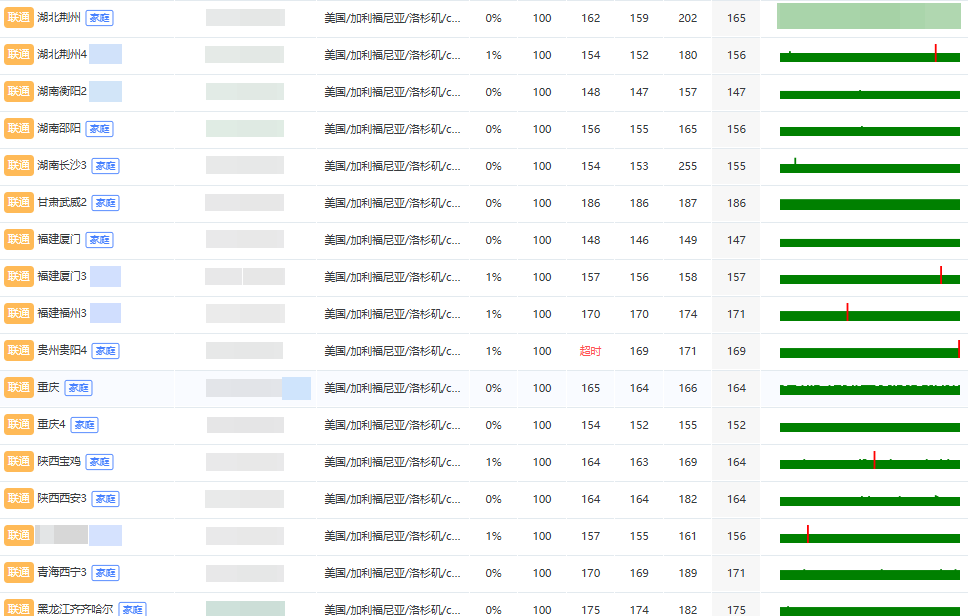
It can also be used on China Unicom's end, with most nodes having a latency of around 150ms-180ms. However, in the screenshot, it can be seen that some Unicom nodes have 1% packet loss and even single point timeout. Therefore, if the business relies heavily on Unicom lines, it is recommended to retest several times at different times. This is not written as a deduction, but as a practical test, the boundary must be preserved: a cross-border route cannot be equally beautiful in all regions and at all times.
Mobile nodes perform relatively neatly, with most nodes experiencing 0% packet loss and latency concentrated around 130ms-170ms. From this screenshot, no large-scale anomalies were observed in the direction of movement. If your visiting users have a high proportion of mobile networks, this is worth recording separately.
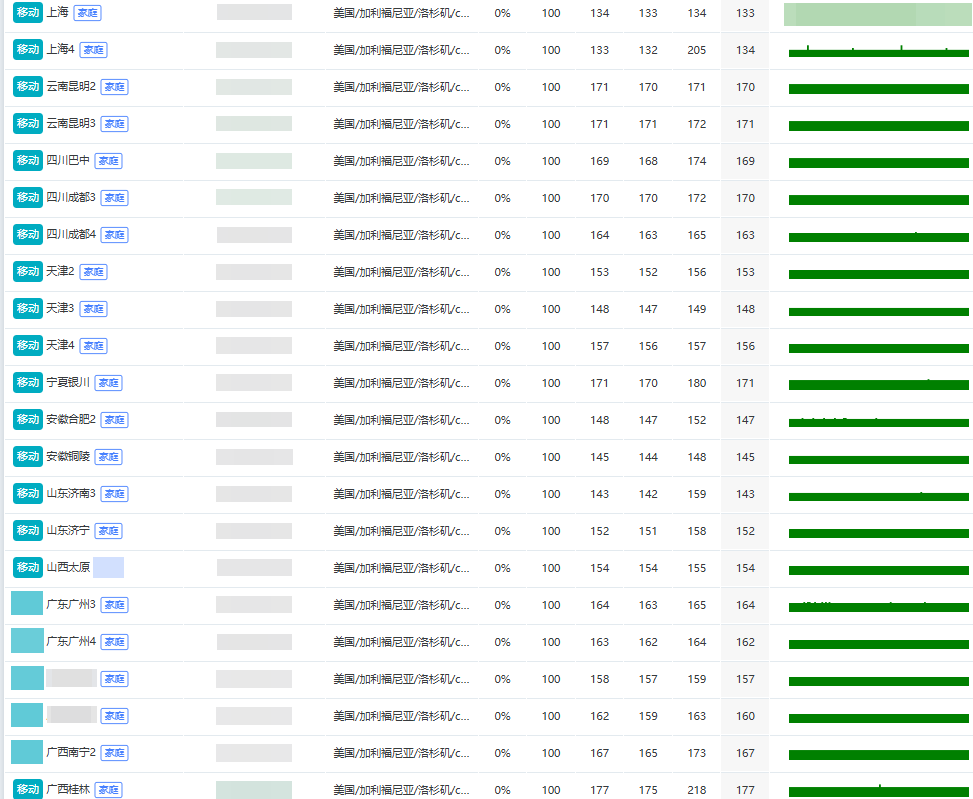
Based on the comprehensive analysis of the three networks, the core advantage of MatrixIDC, a Los Angeles CN2+9929+CMN2, is not the particularly low latency of a single node, but the availability of performance from telecommunications companies such as China Telecom, China Unicom, and China Mobile. For cross-border business, this balance is more important than a single point of beauty.
What can be supplemented by screenshots of global and Asian nodes
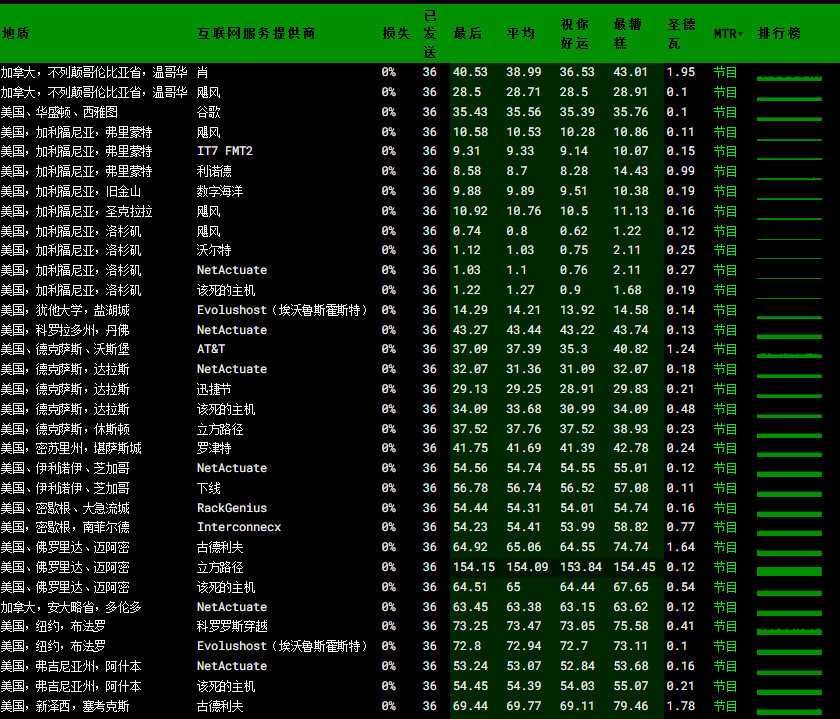
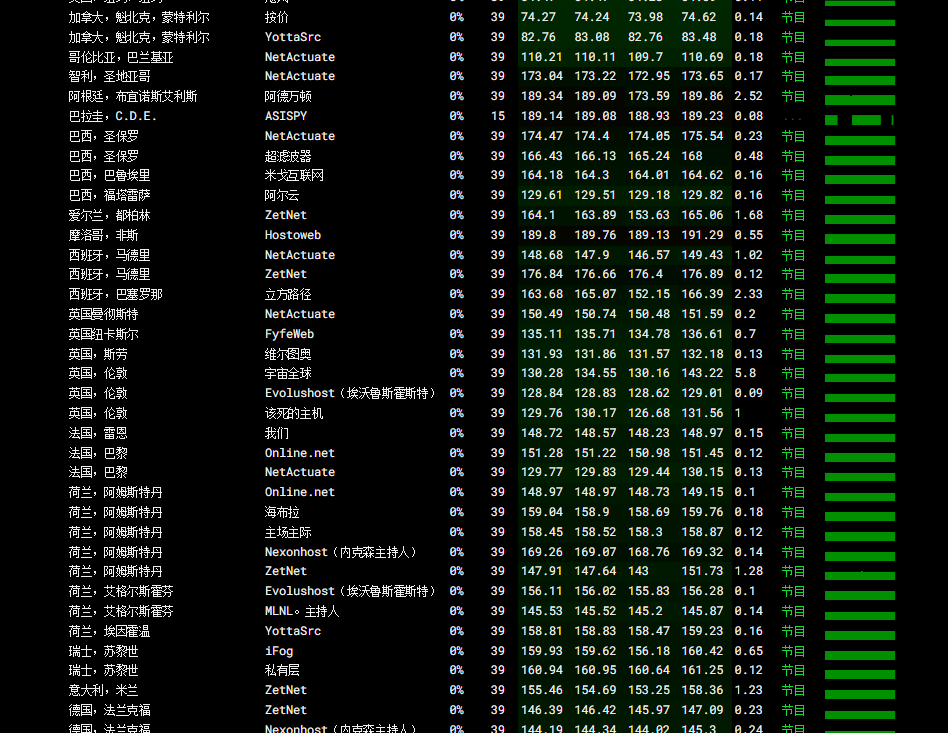
In addition to the domestic three networks, I also looked at screenshots of global nodes and MTR networks. In global testing, there are significant differences in latency between different regions in the United States, Canada, Europe, and Asia, which is a normal phenomenon. The latency is lower in areas closer to Los Angeles, and relatively higher in Europe, South America, and Southeast Asia.
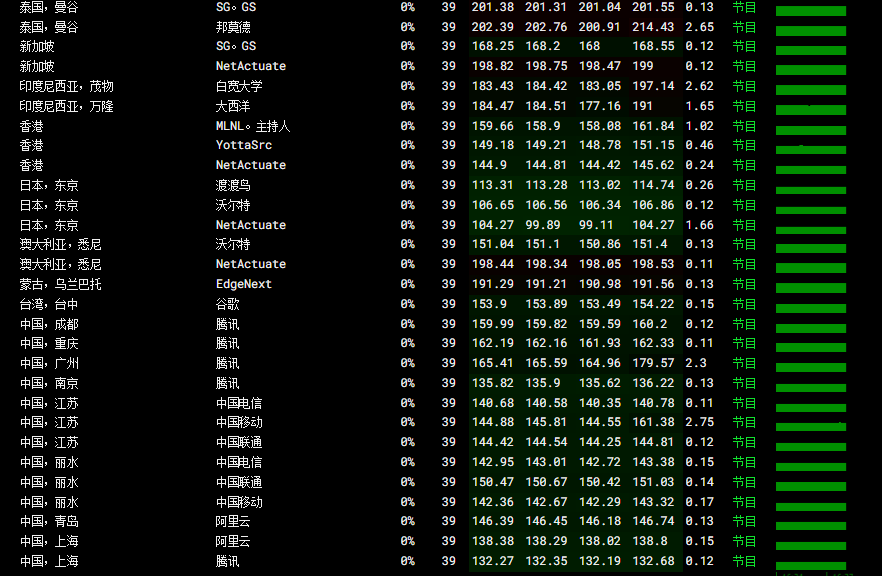
Additional screenshots from the Asian and Chinese directions are more valuable. In the screenshot, we can see the latency of nodes in Hong Kong, Tokyo, Japan, and multiple cities in China. Most nodes did not show obvious packet loss, and the overall line status and ITLOG domestic node testing can be mutually confirmed.
What scenarios are suitable for
VPS like MatrixIDC are more suitable for stable server environments rather than replacing residential ISP IPs. For example, deploying websites, panels API、 Monitor services, lightweight backend, remote tools, or create a stable US server node for cross-border business access.
If your business is cross-border e-commerce background, foreign trade website, data billboard, remote management panel, enterprise internal tools, lightweight API, or American business node for users in Chinese Mainland, Los Angeles CN2+9929+CMIN2 is meaningful. Ordinary US VPS may be cheaper to configure, but the experience of accessing from China may not be explained clearly; The value of optimizing routes lies in reducing the uncertainty of access links.
If your business requires long-term account login, fixed location, identity consistency, and platform risk control environment, VPS can only solve server and access link problems and cannot directly replace static ISP residential IP. The account environment still depends on the IP type separately DNS、WebRTC、 Browser fingerprint and login region consistency.
In other words, MatrixIDC is more like a stable VPS infrastructure choice; If you do account business, it can be used as a backend, tool, dashboard, or auxiliary server, but do not use it as a residential agent.
What is the relationship between using ISP accounts
Many people compare American VPS, American residential IP, and static ISP residential IP together, and it is necessary to distinguish them clearly here. The core value of VPS is server control: you can deploy programs, set up the backend, run services, do monitoring, and maintain the site. The core value of static ISP residential IP is account login exit: fixed location, fixed ISP identity, and long-term records are easier to interpret.
If you are working on website servers, cross-border backend, API services, or tool systems, MatrixIDC's optimized VPS makes sense. If you want to do long-term account login, especially for advertising accounts, store accounts, social media accounts, customer service backend and other scenarios that require stable identity, then do not use VPS's "line stability" to replace residential ISP exit judgment.
These two types of products can be combined, but do not mix concepts. For example, you can deploy your own business tools using VPS and use a static ISP residential IP to host account login environments; VPS can also be used for monitoring, synchronization, and backend tasks, and account login can be placed in a more suitable fixed exit. This way, the division of labor is clearer and it is easier to troubleshoot any problems that may arise in the future.
If your main issue is that your account requires a fixed region, long-term login, and clearer ISP identity, you can first look at the optional regions and periods of [Sureisp Static Residential IP] (https://sureisp.com/product-static-isp.php), and then compare ASN, DNS, WebRTC, time zone, and account information for investigation. MatrixIDC VPS solves the server layer, while Sureisp static ISP residential IP solves the account exit layer. These two issues should not be mixed together.
Advantages and disadvantages
The advantages are relatively clear: the three testing machines are open normally, the backend information is complete, the latency from Los Angeles CN2+9929+CMIN2 to the domestic three networks is relatively stable, the average of 171 domestic nodes is about 160ms, and most nodes have no obvious packet loss. For those who need a VPS in the United States and value the experience of visiting China, this performance is attractive.
The second advantage is transparency in configuration and delivery. The backend can view machine specifications, system versions IPv4、SSH、 Traffic usage and self-service operation entrance. For beginners, this kind of backend is clearer and more worry free than many VPS that only send one open communication and rely on work order configuration afterwards.
The third advantage is that the product positioning is relatively clear. It did not package all lines as a vague 'global boutique network', but directly wrote down specific lines such as Los Angeles CN2+9929+CMN2. For those who have some knowledge of the route, this naming method is easier to determine and more convenient for subsequent review of test data.
Shortcomings should also be made clear. MatrixIDC currently does not have many global regions to choose from like large cloud vendors, with limited supply and regional coverage, mainly concentrated in the United States and Hong Kong. If you want a large inventory in regions such as Europe, Japan, Singapore, etc., it may not be the most suitable choice. It is more suitable for people who clearly need VPS from the United States or Hong Kong and value line quality.
Another drawback is that it still requires users to judge the business adaptation themselves. Cross border public network lines will be affected by operators, international exports, access times, and route adjustments, and cannot be understood as having the same timing just because one test is successful. A more secure approach is to check the line instructions before purchasing, conduct a three network test after activation, retest during peak hours in the evening, and backup and monitor important business.
My conclusion
If we only look at this actual test, MatrixIDC's Los Angeles CN2+9929+CMN2 VPS is worth further observation. Three testing machines of different specifications can all run normally, with clear backend, and stable performance in terms of latency and packet loss for domestic three networks.
I would position it as a "small and specialized" VPS service provider: not a platform with a particularly large product line, but in terms of optimizing routes in Los Angeles, USA, the actual test data is supported. Suitable for cross-border websites, backend services, lightweight APIs, remote panels, and VPS users who require high-quality access from China.
The unsuitable person is also very clear: if you want inventory from dozens of regions around the world, or want to export VPS as a residential ISP account, this direction is not right. The former should seek cloud providers with a more comprehensive region, while the latter should evaluate static ISP residential IP, DNS, WebRTC, and browser environments separately.
My suggestion is: if you happen to need to optimize VPS in Los Angeles, USA, you can put MatrixIDC on the candidate list; If you want a long-term login environment for your account, don't just look at VPS latency. First, check the consistency of the account exit, browser environment, and login region.
FAQ
How is MatrixIDC VPS?
From the three Los Angeles CN2+9929+CMIN2 test machines, it can be seen that the MatrixIDC VPS backend has been delivered clearly, with an average latency of about 160ms for ITLOG 171 domestic nodes, and most nodes in the three networks have not experienced significant packet loss. It is suitable for VPS in the United States, cross-border back office, lightweight API and Chinese Mainland's business in the direction of visiting the United States.
Is MatrixIDC suitable for website building?
Suitable for lightweight websites, enterprise display sites, backend services, monitoring panels, and cross-border business systems. Whether it is suitable for high concurrency business depends on the CPU, memory, disk IO, peak bandwidth, and business access volume, rather than just judging by the line.
Is Los Angeles CN2+9929+CMIN2 suitable for visiting Chinese Mainland?
In this test, the average ITLOG of 171 domestic nodes was about 160ms, while the average values of China Telecom, China Unicom, and China Mobile were all around 160ms. It is more suitable for visiting Chinese Mainland than the ordinary American line, but it is still not the low latency experience of the Hong Kong node.
Can MatrixIDC replace static ISP residential IP?
No. VPS is a server environment, and static ISP residential IP is the account login exit. MatrixIDC can be used to deploy websites API、 Panel and backend services, but long-term account login still requires separate evaluation of IP type DNS、WebRTC、 Time zone and browser fingerprint.
What is the biggest problem with MatrixIDC?
The main problem is limited supply and regional coverage, currently leaning towards the United States and Hong Kong, unlike large cloud providers with many regions. If your requirement happens to be optimizing the route in Los Angeles, USA, its test results have reference value; If you want a large number of global nodes, you need to choose another solution.